

 Facebook
 X
 Pinterest
 Copy Link
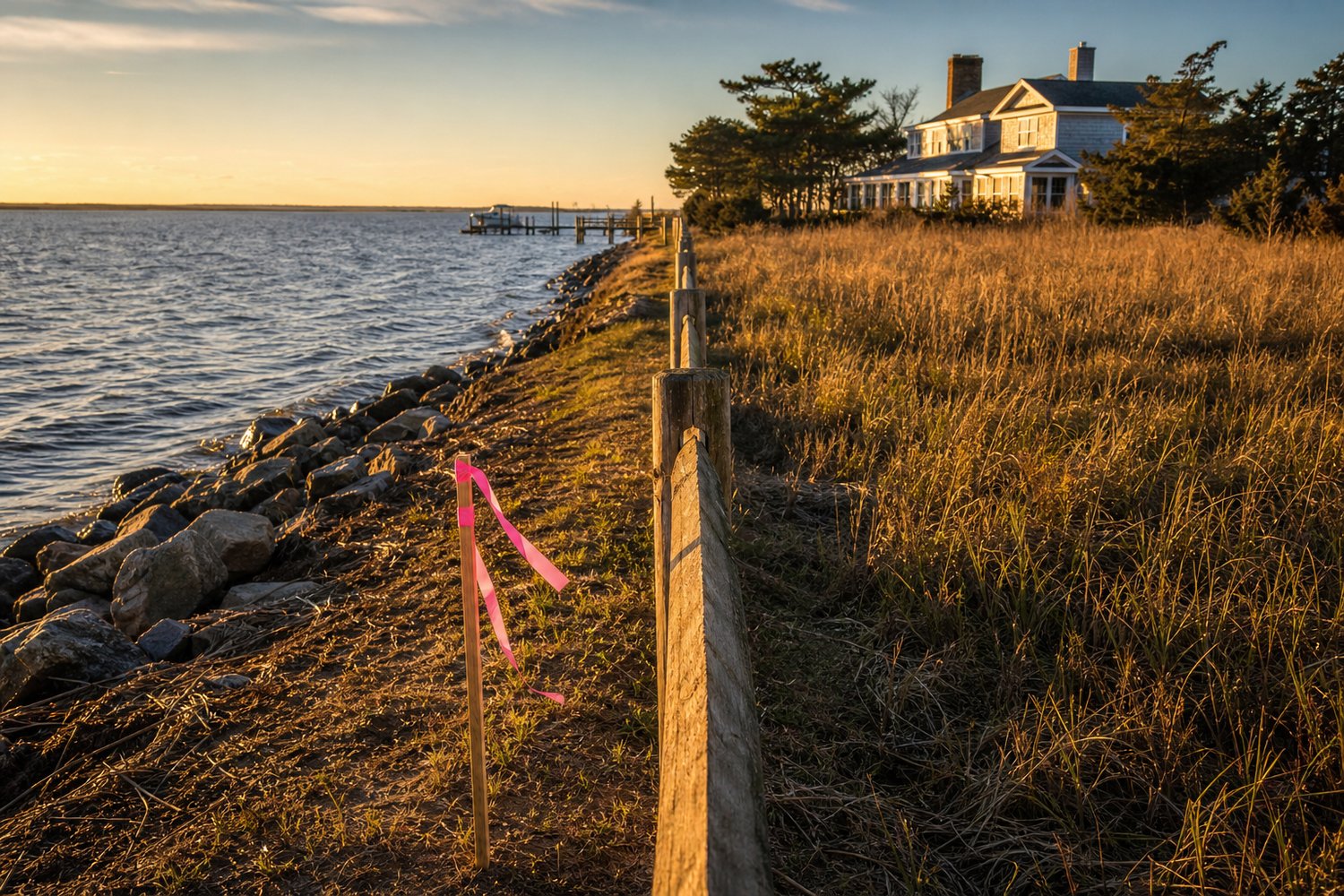
Before you fall for the view, pull the exact parcel on the county’s flood map, get a separate flood insurance quote, and confirm what the dock, bulkhead, or seawall needs. Do all three while you still have time to negotiate or walk away, so the real carrying cost is on the table before you commit.
Waterfront Home Buying Checklist for Cape May County
What should buyers know before purchasing a waterfront home in Cape May County?
A waterfront home in Cape May County should be evaluated parcel by parcel, not by the town name or the view. Before you commit, check the property’s flood zone and elevation, get a separate flood insurance quote, review the home’s flooding history, and have the dock, bulkhead, or seawall assessed. Those four checks decide what the home will really cost to own.
Key Takeaways
- Standard homeowners insurance does not cover flood damage, so a separate flood policy quote belongs in your purchase math before you commit.
- Cape May County’s flood maps can be searched by street address or tax block and lot, so you can check the exact parcel instead of relying on a neighborhood label.
- Oceanfront, Delaware Bay, back-bay, tidal creek, and canal frontage carry different exposure and maintenance profiles, so two waterfront listings at similar prices can cost very different amounts to own.
- Docks, bulkheads, and seawalls can involve municipal and NJDEP approvals plus local floodplain rules, so confirm what is permitted before you count on repairing or replacing one.
- Evacuation routes and road flooding matter as much as the house itself, because a home can sit beside the water and still be hard to reach during a storm.
How do you check flood risk on a Cape May County waterfront home?
Start with the exact parcel. Cape May County’s Flood Guide points buyers to its Flood Inundation Maps, which you can search by street address or tax block and lot. The map layers include hurricane inundation categories, evacuation routes, and flood plains.
I walk my clients through this before we ever write an offer. A listing description says “bayfront” or “on the water.” The parcel map tells you what that means for flooding.
Pull the parcel, not the neighborhood
Two homes on the same street can sit in different flood conditions. The county also offers flood-zone information by tax block and lot through its Public Information page, and its GIS office is the county’s source for wetlands, flood zones, and aerial photography. Review the floodplain, wetlands, and evacuation-route layers together, not one at a time.
Ask about elevation and flooding history
The county’s flood guidance recommends asking whether the property sits above or below flood-stage water levels and learning its history of flooding before you buy. Here is how I’d approach that:
- Elevation: Ask whether an elevation certificate exists, and have your surveyor, inspector, or engineer reconcile the structure’s elevation with the applicable flood map.
- Repair records: Ask the seller for repair records, insurance-claim information, permits, and mold-remediation records.
- Replaced systems: Ask for documentation on any replaced electrical, HVAC, roofing, siding, pilings, bulkheads, or seawalls.
A flooding history is something you assemble from the seller, the records, and the inspection. I’m not aware of a single countywide database that gives a complete history for every home, so ask direct questions and get the answers in writing.
Look at the roads, not just the lot
A waterfront home can have great water access and still face flooded roads, storm closures, and limited evacuation routes. In an August 2025 advisory about Hurricane Erin, the county’s Office of Emergency Management flagged coastal flooding concerns for Delaware Bay and barrier-island communities, including low-lying areas of Middle Township and Dennis Township. That was a storm advisory, not a forecast, but it shows why access matters. Check the evacuation-route layer on the county’s map next to the parcel itself.
Does a waterfront home in Cape May County need separate flood insurance?
Yes, plan on it. Cape May County states that standard homeowners insurance does not cover flood damage, and it advises owners to ask an insurance agent about a separate flood policy. The county also notes that flood-insurance rates are based on a property’s flood zone, which is why the parcel check comes first.
Get the quote before your contract deadline
Request flood-insurance pricing while you still have time to negotiate or walk away. Don’t wait until after closing preparations are underway. When you talk with an insurance agent, ask what the policy covers for:
- The building itself
- Contents
- Below-grade areas
- Mechanical equipment
- Additional living expenses
I won’t guess at your premium here. It depends on the zone, the elevation, and the home, and a quote for your specific property is the only number worth using. What I will tell you is that insurance, property taxes, and maintenance together set your real monthly cost. My breakdown of Cape May County property tax rates by municipality covers the tax side, and if you’re coordinating this purchase with a home you already own, see how to fund a shore purchase when you already own a home.
Watch for rules that are still developing
Cape May County’s NJPACT/REAL page describes the county’s concern that proposed state flood and climate-resilience rules could affect flood-hazard areas, construction standards, insurance premiums, and property values. That is the county’s analysis of proposed rules, not a statement that every change is binding law. Before you buy, confirm the current status of any rule that could touch your property with the New Jersey Department of Environmental Protection.
What waterfront features and maintenance should you inspect before buying?
Inspect the water-facing structures separately from the house. A standard home inspection looks at the home, and a waterfront home also needs someone qualified to assess the bulkhead, dock, pilings, seawall, or shoreline stabilization. Those are the pieces most exposed to the water, and they are often the most expensive to deal with.
Know which type of frontage you’re buying
“Waterfront” covers very different properties in Cape May County. The county’s mapping resources help identify physical characteristics, but you still need to match the frontage type to the right questions.
| Frontage type | What to verify on the parcel |
|---|---|
| Oceanfront | Wave action, storm surge, and erosion exposure |
| Delaware Bay | Storm surge, tidal flooding, and erosion exposure |
| Back-bay | Tidal flooding, water access, and navigation conditions |
| Tidal creek | Tidal flooding, salinity effects on materials, and navigation access |
| Canal front | Bulkhead condition, tidal flooding, and navigation access |
Each type brings a different mix of exposure, so a price comparison between two waterfront listings tells you very little until you’ve compared what each one asks of its owner.
Treat docks and bulkheads as their own due diligence
Don’t assume you can freely repair, replace, or add a dock, bulkhead, seawall, boat lift, or stairs. These structures may involve municipal approvals, NJDEP waterfront-development rules, wetlands constraints, and engineering review. One county-hosted NJDEP Waterfront Development Permit document notes that state approval does not remove the local floodplain administrator’s responsibility to enforce local flood-damage-prevention ordinances and minimum National Flood Insurance Program standards.
In plain terms, a permit from one agency doesn’t settle everything. If the dock or bulkhead is part of why you want the property, ask what’s there, what condition it’s in, and what approvals it would take to repair or replace it. I have those conversations with buyers before the inspection period runs out, because that’s when you still have leverage.
Pair the inspection with current comparable sales
Prices for waterfront property vary widely by frontage type, elevation, and the condition of the shoreline structures. The county publishes annual datasets on its Sales Data page, and I pair those with current MLS comparables for the specific type of waterfront home you’re considering. Your number depends on the home, the frontage, and the timing, and that’s where a local market analysis comes in. If you’re weighing high-end shore homes, what sets luxury homes apart at Cape May’s southern NJ shore is a useful companion read.
A simple order of operations
- Pull the parcel on the county flood map using the address or tax block and lot.
- Ask the seller for elevation information, repair records, and claim history.
- Request a separate flood insurance quote before your contract deadline.
- Schedule the home inspection plus a qualified review of the bulkhead, dock, or seawall.
- Confirm permit status for any shoreline structure you plan to repair or replace.
- Review evacuation routes and road access alongside the parcel map.
Your closing agent handles settlement and the trust of funds, but none of the steps above happen at the closing table. They happen before you’re committed, and that’s why I front-load them.
If you’d like a second set of eyes on a specific property, you can read what past clients say about working with me on Google, Zillow, and Realtor.com.
FAQ
Do I need separate flood insurance for a waterfront home in Cape May County?
Yes, standard homeowners insurance does not cover flood damage, according to Cape May County. Ask an insurance agent for a flood quote on the specific property before your contract deadline, since rates are tied to the property’s flood zone.
How can I check whether a Cape May County property is in a flood zone?
Use the county’s Flood Inundation Maps and search by street address or tax block and lot. The county also provides flood-zone information by tax block and lot, and its GIS office is the source for wetlands and floodplain layers.
How can I find out whether a waterfront property has flooded before?
Ask the seller directly and request repair records, insurance-claim information, permits, and mold-remediation records. The county recommends learning a property’s flooding history before you buy, but there isn’t a single verified countywide database for every home, so the documentation matters.
Can I legally maintain or rebuild a dock, bulkhead, or seawall?
It depends on the structure and the location. Work on these may involve municipal approvals, NJDEP waterfront-development rules, wetlands constraints, and local floodplain requirements, so confirm what is permitted before you rely on repairing or replacing one.
What is the difference between oceanfront, bayfront, creekfront, and canal-front property?
Each involves a different mix of wave action, storm surge, tidal flooding, erosion, salinity, navigation access, and maintenance. Oceanfront and Delaware Bay frontage face open-water exposure, while back-bay, creek, and canal properties raise more questions about tidal flooding, bulkheads, and navigation.
The core takeaway is simple: a waterfront purchase is won or lost on parcel-level details, and the time to check them is before you’re committed. I’ve guided buyers through this process across Cape May County, and I’ll help you pull the maps, line up the right insurance and inspection professionals, and read the results with you. Call or text me at 609-972-6927, email chris@capemaychris.com, or start your search at www.capemaychris.com/search.
Equal Housing Opportunity. This article is general information, not legal, tax, or financial advice. Confirm your own numbers and requirements with your closing agent, tax advisor, insurance agent, or lender.
