

 Facebook
 X
X
 Pinterest
 Copy Link
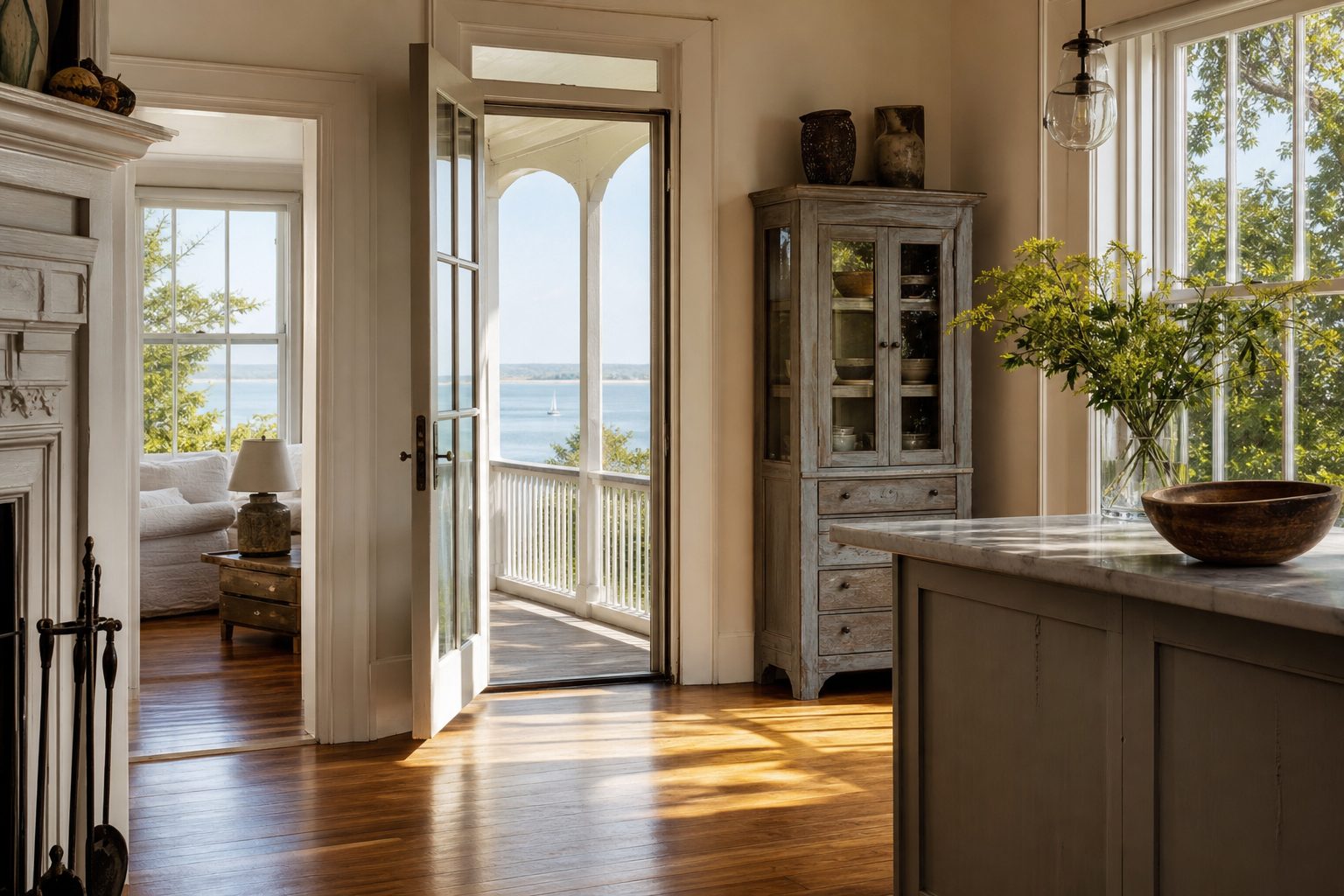
The historic core of Cape May is Victorian, but it mixes Queen Anne, Stick, Gothic Revival, and Carpenter Gothic houses, while newer homes across the county offer open layouts and modern systems. Victorians bring porches, millwork, and street presence with more upkeep and possible design review. Newer homes bring flexibility with less period character.
Cape May for Home Buyers Comparing Architectural Styles
What should Cape May for Home Buyers know about architectural styles?
Architecture is one of the biggest decisions in Cape May for home buyers, because the style you choose sets your upkeep, your renovation options, and how you live day to day. The historic core of Cape May is Victorian, but it mixes Queen Anne, Stick, Gothic Revival, and Carpenter Gothic houses, while newer homes across the county offer open layouts and modern systems. Victorians bring porches, millwork, and street presence with more upkeep and possible design review. Newer homes bring flexibility with less period character.
Key Takeaways
- Cape May’s historic character is Victorian but not uniform: after the 1878 fire, the city rebuilt with Queen Anne, Gothic, and American bracketed styles, according to the City of Cape May.
- The city’s official style guide dates Gothic Revival and Carpenter Gothic to roughly 1830 to 1890, so “Victorian” covers very different rooflines, woodwork, and porches.
- The Cape May Historic District is a National Historic Landmark, so confirm a property’s status and review process before you plan any exterior work.
- Historic designation does not automatically mean you can’t change a home; the real questions are which district the property sits in and what review applies to the work you want.
- Cape May, West Cape May, Cape May Point, and Lower Township differ in building age, flood exposure, and lot patterns, so never treat “Cape May” as one uniform market.
What architectural styles are most common in Cape May homes?
Queen Anne, Stick, Gothic Revival, and Carpenter Gothic houses dominate the historic residential streets, with Greek Revival influences and earlier regional farmhouse forms showing up elsewhere in the county. Here is how I break them down for my clients.
Queen Anne and the post-fire rebuild
The City of Cape May’s history page explains that after the 1878 fire, the city rebuilt with Queen Anne, Gothic, and American bracketed styles rather than adopting the newer resort architecture popular elsewhere. That is why the streetscape feels so cohesive. When I tour a Queen Anne with a buyer, I look at the roof junctions and the porch first, because that is where complex houses tend to have trouble.
Stick style
The Emlen Physick Estate is the local reference point. The New Jersey Historic Trust describes the 1879 building as Victorian Stick style, attributed to Philadelphia architect Frank Furness, with ornate inverted chimneys, an arcaded porch, dormers, and combined roof forms. Those same features are what make a Stick-style house a maintenance conversation: more roof forms mean more places where water can find a way in.
Gothic Revival and Carpenter Gothic
The City’s architectural style guide identifies both as local styles dating approximately from 1830 to 1890. Expect steep, vertical proportions, decorative woodwork, and porches. Two houses a block apart can both be called “Victorian” and feel completely different inside and out.
Greek Revival and earlier county forms
Not everything historic is Victorian. The Cape Island Presbyterian Church has Greek Revival-influenced features and a distinctive belvedere. Out in the county, Historic Cold Spring Village preserves earlier domestic architecture, including the 1837 Corson-Hand House and the Ezra Norton House from around 1850, which shows the transition toward early Victorian layouts.
| Style | What you’ll notice | What to ask about |
|---|---|---|
| Queen Anne | Asymmetrical massing, varied rooflines, porches, decorative trim | Roof junctions, porch framing, exterior trim condition |
| Stick style | Ornate inverted chimneys, arcaded porch, dormers, combined roof forms | Chimney condition, flashing where roof forms meet |
| Gothic Revival and Carpenter Gothic | Decorative woodwork, vertical proportions, distinctive rooflines | Wood trim, siding or shingle condition, window repair |
| Greek Revival-influenced and earlier forms | Earlier regional floor plans, original windows and finishes in surviving examples | Original windows, foundations, mechanical updates |
| Newer and luxury construction | Open layouts, larger kitchens, ensuite bedrooms, elevators, resilient exterior materials | Flood exposure, setbacks, lot coverage, parking |
How does architectural style change daily life and upkeep?
Historic homes trade efficiency for character, and newer homes reverse that trade. In my experience, buyers who understand this before they fall in love with a porch make far better decisions than buyers who find out after closing.
What you gain and give up with a Victorian
The upside is real: front porches, distinct rooms, high ceilings, decorative millwork, and a strong street presence. The trade-offs are just as real:
- Less efficient floor plans with distinct rooms instead of open space
- Narrower stairs and limited closet space
- Older mechanical systems that may need updating
- More specialized repair work than you would face in newer construction
For Cape May for home buyers who want a house that feels like part of the town’s story, those trade-offs are often worth it. For buyers who want to arrive for a weekend and not think about a to-do list, they can be a poor fit.
What newer and luxury construction offers
Newer homes in Cape May County tend to prioritize open layouts, larger kitchens, ensuite bedrooms, elevators, and contemporary storm-response features. They offer more flexibility for modern household needs. You still need to compare the streetscape, lot coverage, setbacks, parking, and flood exposure against the character of nearby historic properties. I cover that side of the market in what sets luxury homes apart on the Southern NJ Shore, and the oceanfront-oriented options in Cape May Point and the Lower Township market read quite differently from the historic grid.
Primary residence, second home, or seasonal rental
How you plan to use the house matters as much as how it looks. A primary residence puts a premium on systems, storage, and layout. A second home often rewards low-maintenance exteriors. If rental income is part of your plan, read my breakdown of investing in Cape May area vacation homes before you commit to a style. Your best match depends on your goals, and that is exactly what I sort out with buyers before we ever tour a house.
Can you renovate or add on to a historic Cape May home?
Often yes, but it depends on whether the property is in a locally regulated historic district and what review applies to the exterior work you have in mind. Historic designation is not the same as a blanket ban on change.
The New Jersey Historic Trust identifies the Cape May Historic District as a National Historic Landmark. For a buyer, that means a property’s historic context may affect exterior alterations, additions, demolition proposals, and the design review process. The exact restrictions depend on the property’s location and the applicable local rules.
Location detail matters here. The West Cape May Historic District holds a preserved collection of late 19th and early 20th century residential buildings in multiple styles, and it is included within the Cape May Historic District listed on the State and National Registers of Historic Places. Still, a property’s mailing address, its historic-district status, and its local design-review requirements are three separate questions. Do not assume one answer covers all of them.
Before you write an offer on a house where you want to change the exterior, confirm the property’s status and the approval process with the City of Cape May or the relevant municipality. I help my clients ask those questions early, while there is still time to adjust the plan or walk away.
What should you inspect before buying an older home near the shore?
Focus on the parts of the house that handle water, wind, and age: the roof, chimneys, porches, exterior wood, and the mechanical systems. Complex rooflines and coastal exposure make these the highest-priority items, and a licensed inspector should evaluate every one of them.
- Roof and complex roof junctions, where multiple roof forms meet
- Chimneys, especially decorative or inverted designs
- Porches, including framing, railings, and decking
- Exterior trim, wood siding, or shingles
- Windows, original or replaced
- Drainage and foundations
- Electrical, plumbing, and heating and cooling systems
- Evidence of moisture or storm exposure
These priorities come from the construction complexity of these houses and their coastal setting. They are not a substitute for a licensed inspection. I walk my clients through the inspection report line by line, so we know which findings are normal for a house of that age and which ones should change the conversation.
FAQ
Which Cape May neighborhoods have the most Victorian houses?
Cape May city’s historic residential areas have the strongest concentration, with Queen Anne, Gothic, Carpenter Gothic, and Stick forms creating a cohesive streetscape. West Cape May also holds late 19th and early 20th century homes in multiple styles. Other county communities, including Cape May Point and Lower Township, have different building ages and architectural inventories.
Are modern homes available in Cape May, or is the market mostly historic properties?
Newer construction is available across Cape May County, but the mix varies a lot by municipality. The historic core is mostly period homes, while other communities offer more recent builds. You can browse current listings at www.capemaychris.com/search, or I can build a targeted search around the style you want.
What is the difference between a Queen Anne, Stick Style, and Carpenter Gothic house?
Queen Anne houses typically feature asymmetrical massing and decorative trim, Stick-style houses show ornate chimneys, arcaded porches, and combined roof forms, and Carpenter Gothic houses emphasize vertical proportions and decorative woodwork. All three appear in Cape May’s historic building stock. The City’s architectural style guide is a good reference to read before you tour.
Are historic homes in Cape May harder to renovate than modern homes?
Often, yes, because they involve more specialized repair work, older systems, and possible design review of exterior changes. Interior work is usually less complicated than exterior work. Confirm the property’s district status before you plan anything visible from the street.
Do architectural style and historic-district location affect resale appeal?
They can, because buyers respond to character, layout, and upkeep expectations differently. How much it matters depends on the specific house, its condition, and its location. A local market analysis comparing similar properties is the right way to measure it, and I am glad to run one for you.
Choosing a style is choosing a way to live
The right house is the one whose upkeep, layout, and rules fit how you plan to use it. If you want to compare a Victorian, a newer build, and everything in between for Cape May for home buyers like you, I will walk you through each one with real inspection and review questions in hand.
Call/Text/Email: 609-972-6927 | chris@capemaychris.com
Search Homes: www.capemaychris.com/search
Equal Housing Opportunity. This article is general information, not legal, tax, or financial advice. Confirm your own numbers with your closing agent, tax advisor, or lender.
